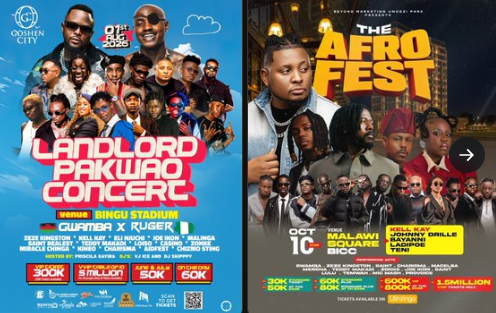
A quick glance at two of Malawi’s biggest music lineups—the Landlord Pakwao Concert and the upcoming The Afro Fest—perfectly captures a growing frustration on Malawian social media. Zeze Kingston, Gwamba, Kell Kay, Saint, Charisma, Teddy Makadi, Zonke, and Joe Ikon are heavily billed on both posters. This has fans asking a tough question: Is our music industry too small with very few artists (oimba ndi ochepa), or is there a deeper issue at play?
Here is a quick breakdown of the online debate, promoter reality, and the artist perspective.
1. The Digital Uproar: Fan Frustration
Across Facebook and X, comment sections are buzzing with complaints about “lineup fatigue.”
- Repetitive Shows: Fans argue that paying premium ticket prices—from 30K Standard up to 1.5 Million VVIP—feels less exciting when the running order of artists is identical every few months.
- Gatekeeping Accusations: Music enthusiasts point out that fresh, talented underground artists making waves on TikTok or streaming platforms are continuously left out.
2. The Promoters’ View: Risk vs. Profit
From a business standpoint, booking massive venues like Bingu National Stadium or Malawi Square (BICC) is a massive financial gamble.
- Guaranteed Sellers: Industry promoters note that acts like Gwamba and Zeze Kingston have proven track records of moving tickets.
- Financial Safety: To recoup millions spent on international acts (like Ruger, Johnny Drille, or Teni) and heavy production, organizers stick to trusted hitmakers rather than risking money on unproven names.
3. The “Oimba Ndi Ochepa” Reality
Malawi does not have a shortage of musicians; it has a lack of industry structure. Without professional talent management, diverse corporate sponsorship, and smaller club circuits, rising artists struggle to build mainstream brands. Consequently, the same 10 to 15 artists continue to dominate commercial radio and major stages.
The Way Forward
The goal isn’t to replace established stars who earned their spots, but to open the door wider. Promoters can fix this by introducing dedicated early slots for rising talent and deliberately mixing a few dominant headliners with fresh, buzzworthy acts. For Malawian music to grow, the big stage needs to make room for new voices.

